
[2025 World Robot Conference Opens, Leading Enterprises Including Unitree and UBtech Unveil New Products]
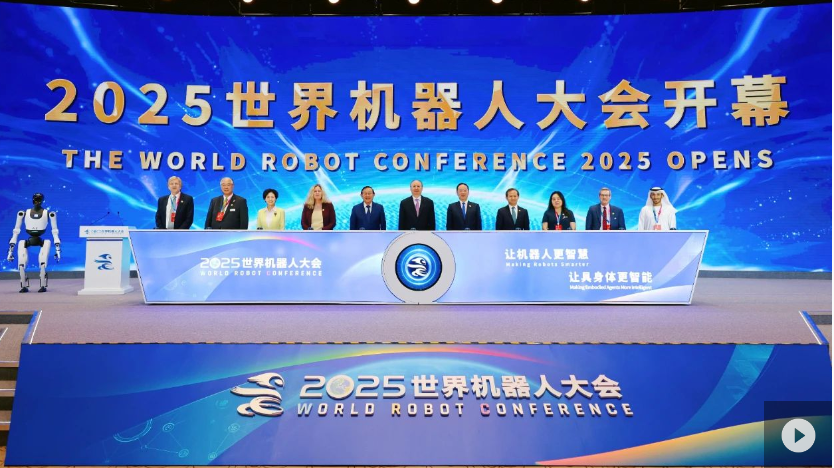
On August 8, the 2025 World Robot Conference (WRC) officially opened in Beijing.
The Tiangong 2.0 humanoid robot from the Beijing Humanoid Robot Innovation Center (National-Local Joint Innovation Center for Embodied Intelligent Robots) took the stage as a host at the opening ceremony.
In the exhibition area, 11 UBtech Walker S2 humanoid robots moved their arms in perfect coordination and performed collaborative operations via a swarm brain network.
Nearby, the booth of Unitree Robotics, showcasing its new humanoid robot R1 and quadruped robot A2, was once again packed with visitors.
On the opening day of WRC, Chinese enterprises impressed the entire event with cutting-edge hard-core technologies.
The conference takes "Making Robots Wiser, Empowering Embodied Intelligence Smarter" as its theme. It is concurrently accompanied by the World Robot Expo and robotics competitions, highlighting the application achievements of the "Robot Plus" initiative.
The event features three major exhibition halls: the Innovation Hall, Application Hall and Technology Hall. It gathers more than 200 domestic and overseas robotics enterprises, including over 50 humanoid robot manufacturers, displaying over 1,500 exhibits. More than 100 debut products covering robots, sensors, dexterous hands, micro planetary roller screws and other core components will also be unveiled.
At its booth, UBtech showcased its groundbreaking collective intelligence technology for humanoid robots for the first time. Relying on the overall scheduling and task allocation management of Swarm Brain Network 2.0, multiple Walker S2 and Cruzr S2 robots collaborated with UQI Wali U600 jacking mobile robots and Chitu autonomous logistics vehicles, demonstrating full-process operations ranging from warehousing and handling to intelligent sorting.
Meanwhile, 11 industrial humanoid robots Walker S1 on site completed complex dynamic random sorting tasks. Powered by precise visual recognition and online trajectory planning algorithms, their dexterous hands and bionic arms worked in coordination to fulfill the challenging operations.